
All aboard the OKC hate train
How did it get so crowded in here?

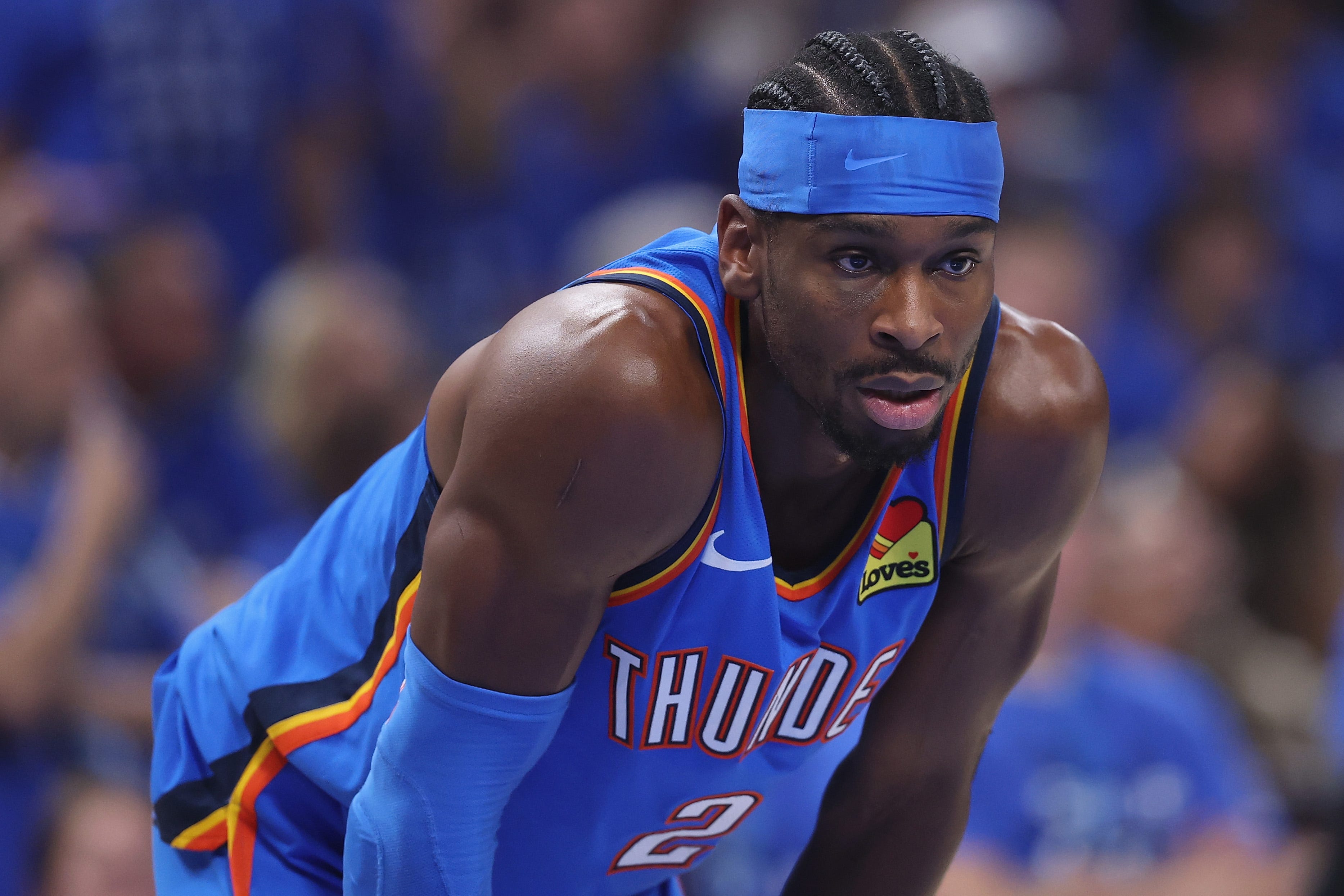
I guess I should start by saying that I hated the Oklahoma City Thunder before it was cool. I’m not Christopher Columbus; I’m not going to pretend I founded this place. Sonics fans were here first, arms outstretched as I curiously waded through the shallow waters towards their island’s shore.
We chatted and traded stories around the fire while the local children danced to old Seattle chants. While their hatred was founded by proximity, mine was rooted in jealousy. The Thunder’s rise happened to be timed perfectly with my team’s descent. As if the Memphis Grizzlies were literally Thunderstruck, the team seemed to absorb all of our powers overnight. One second, my Grizzlies were the young, dazzling team dancing in postgame pressers. But OKC took it, and they did it better. SGA was perfect with his flawless off-court reputation and rhyming Instagram captions — an irritating contrast to my flawed, gun-toting franchise player who posted on social media with the recklessness of a teen navigating Facebook in 2012 without parental supervision. Of course I hated them! They were winning; a reminder of what my team was supposed to be. And then the Grizzlies played them in the playoffs, and Lu Dort killed Ja Morant, and I vowed to never let that hate die.
But just one year later, hating the Oklahoma City Thunder has become a trend. Hating them is like a virus that spreads with minimal contact, something so contagious that it seeps into its carrier through one viewed tweet, revealing itself in predictable quips. They flop too much! They’re ruining basketball! SGA is a foul merchant!
On the other side is the vaccinated crowd, just as overbearing with their intensity. The ones who have shielded themselves from the virus and feel a need to overcorrect, spitting on the very notion that something is wrong with this OKC team; that even suggesting it is an insult to the game of basketball. These warriors bravely proclaim that no hate of this magnitude has ever existed. While I appreciate their noble intentions, that couldn’t be further from the truth. When I see tweets that suggest Shai Gilgeous-Alexander and the Oklahoma City Thunder are enduring a hate train worse than anything the NBA has ever seen, I see LeBron’s face and hear Taylor Swift’s words: You wouldn’t last an hour in the asylum where they raised me.
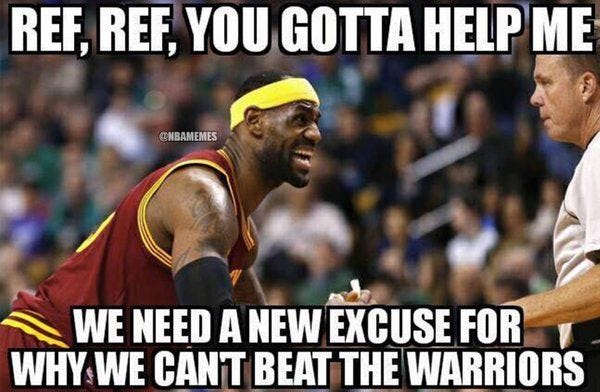
The difference is not the magnitude — or even the toxicity. It’s the delivery. We used to get terribly photoshopped memes of LeBron: ringless, pathetic, Superteam-reliant, in bed with the referees — all of the same tropes that follow superstars of the modern day, just in a less overwhelming package. There is nothing dreadful about a poorly-constructed meme. I wish I knew how sacred these tokens of early online hate were. Now, AI-generated images of a yassified SGA in the arms of a referee fill the timeline, racking up hundreds of thousands of likes. How can this not seem overbearing when it’s so dreadfully banal? Hatred used to be thoughtful. The greatest haters of our civilization used to dust off Adobe Photoshop with the careful precision of Da Vinci with an easel. Hatred used to require effort and time. Now it’s picked up like a shiny piece of trash, fed into a machine, and returned to us with all the personality sanded off.
The Thunder aren’t experiencing unprecedented hate. We’re just enduring sports discourse in the age of infinite content — hence why it feels so overwhelming.
The internet has become endless, designed to keep us engaged and reeling. Twitter used to be a place that simply ended when there was nothing new from the people you followed. Now, the For You page is a black hole of discourse from faceless accounts you’ve never heard of, a funhouse covered in distorted mirrors. The recipe for virality is simple: latch onto whatever topic is trending in your siloed corner of the internet and take a definitive stance on it. The algorithm will take it from here. People will either declare you Twitter’s supreme leader or suggest your parents never should have procreated — it’ll be great!
For the past few weeks, that particular topic has been SGA’s flopping. All you have to do is say something dramatic about SGA’s role in the sanctity of our beloved sport. It doesn’t have to be funny or original. In fact, the more closely it resembles the last thousand versions of the joke, the better.
Here’s the thing: It’s ok to hate OKC. SGA does flop! A lot of players flop and we should call it out when it happens! But the reason people hate OKC isn't really because they're uniquely evil. It's because that's what happens when someone becomes great. It’s happened since the beginning of the internet. It will keep happening. Joker’s nonchalance was charming at first before people coined it “a gimmick.” Wemby’s emotions will soon become “corny.” You are loved until you pose a threat. It’s part of the game.
I happened to love everything SGA said in his end-of-season presser. I liked his measured comments about his team; the way he refused to take bait and throw anybody else under the bus. He seems like a genuinely good person.
But none of that matters. When a team or player becomes too powerful, they must fall. Such is the natural order of sports, a world played out in real time and governed by haters on the internet.
My problem isn’t the jokes. Sports should be fun! Mocking great teams is one of the oldest traditions in fandom. My problem is the mindlessness; the itch to participate and echo without stopping to ask why.
Chet Holmgren has a bad Game 7 and people rush to declare his career over. Shai’s team sues a gambling company for using an AI-generated version of his likeness to promote a product and suddenly he’s “too sensitive.” Every basketball conversation has to be stretched to its most extreme form, sucking all of the joy out of it until it becomes a referendum on somebody’s actual character.
Sometimes I feel like Twitter is being inherited by people who don’t remember an internet that ended — an internet that wasn’t optimized to keep you scrolling, reacting, choosing a side for the sake of engagement. Then again, maybe every generation exposed to those incentives eventually becomes the same.
But I implore everyone — the ones holding the AI-generated pitchforks and the ones carrying the torch of memes past — to remember that nothing is as extreme as it seems. There are real, live people who watch basketball games and do not crawl to the internet to announce their opinions. They watch the game, maybe text their friends, and move on with their evenings. But we spend so much time drowning in the online version of reality that we start mistaking it for reality itself.
Remember that you’re surrounded by engagement farmers, anonymous accounts, bots regurgitating all of the above. It’s easy to get sucked in.
The Thunder are probably not a terrorist organization. They’re probably not the cure for world hunger either. They’re just a really good basketball team that happens to exist in the worst time to exist on the internet.
Reading this gave me a little bit of relief as an OKC fan - I expect nothing more than to be hated by our rivals, but the amount of slop and discourse on social media against this team really got out of hand at times. I yearn for the days when the meme template was Melo or CP3 were unable to pick up a phone because they couldn’t hear the ring lmao. Grateful and happy to see you address this🫡
Brilliant (as always). Clever (as usual). Spot on ( ‘cuz Moll Don’t Lie).