
Why basketball?
How an unathletic girl from Memphis became a voice in NBA media

This summer, I had the opportunity to cover the NBA rookie photoshoot for Bleacher Report. The assignment was joyous: create social content with a group of young men standing at the doorway of their lifelong dream.
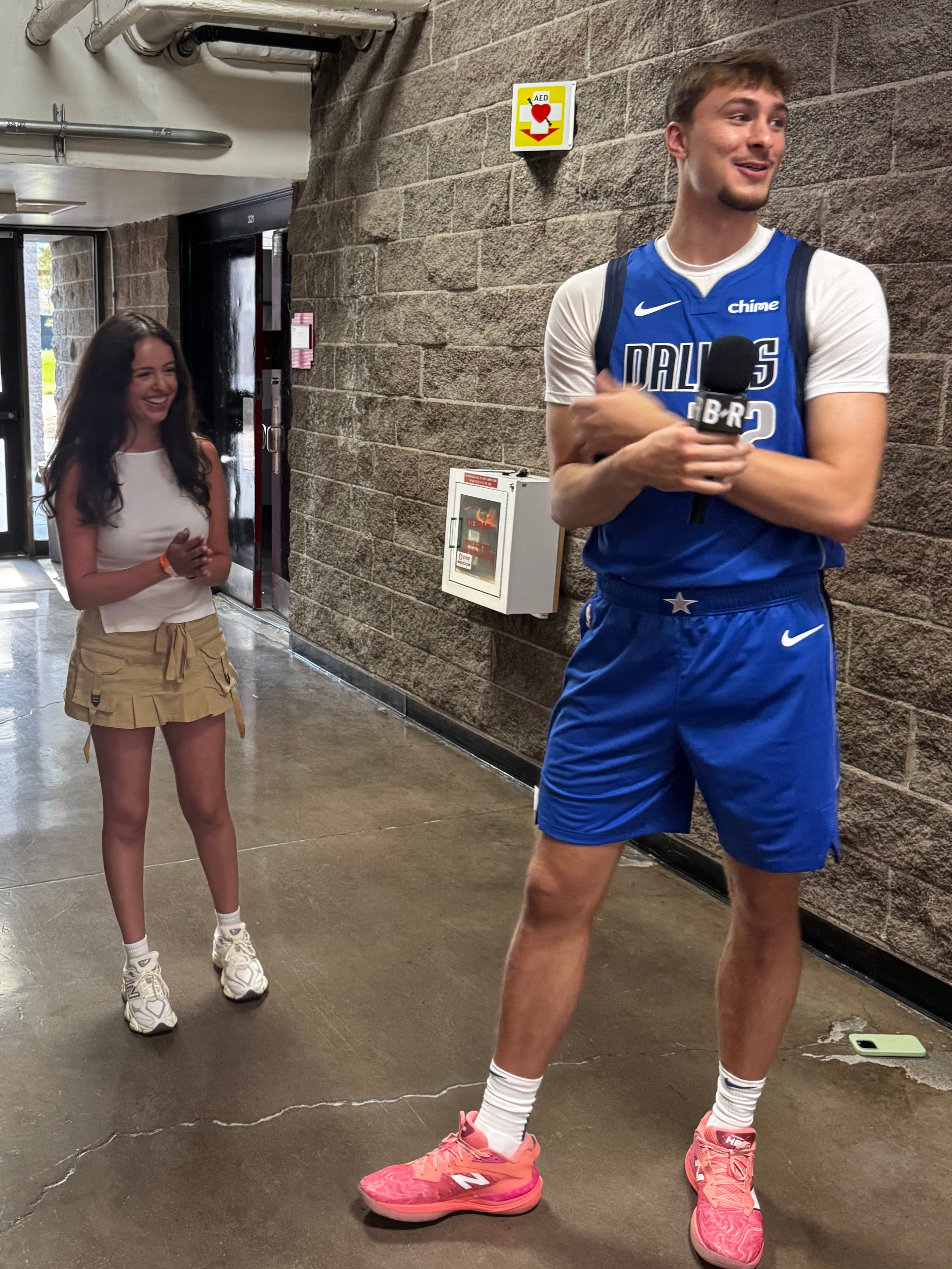
The event took place in a UNLV building that mirrored a high school. If you’ve experienced summer in Las Vegas, you know that sweat is basically an accessory. Temperatures rarely dip below 100, and the hallway we were stationed in for 8+ hours a day while the rookies filed through had no air-conditioning.
The festivities lasted two days, the rookies deemed relevant enough to photograph split between them, but the cast of characters behind the cameras stayed the same.
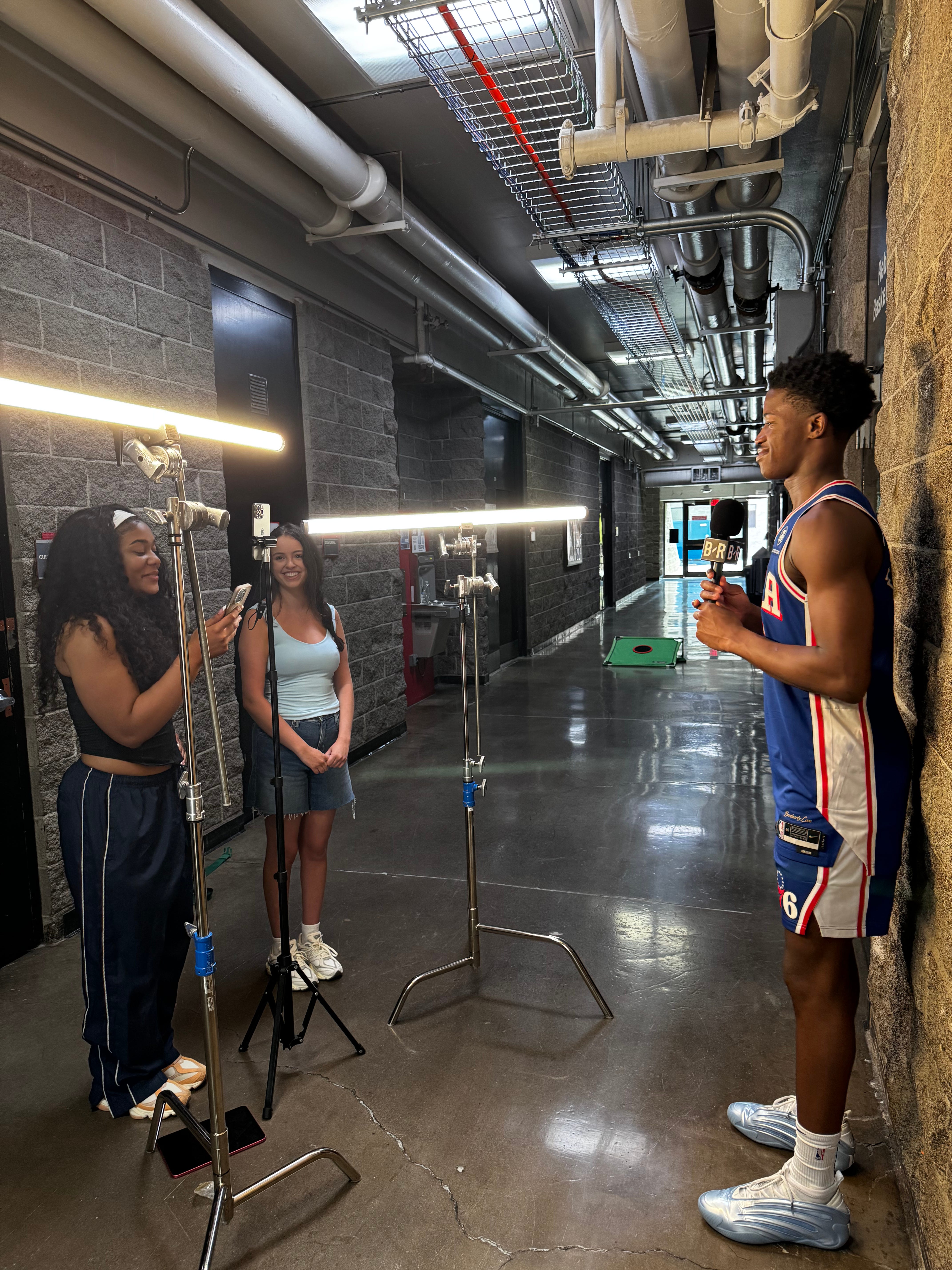
While our heat situation was merely an inconvenience, the men stuffed into an unremarkable classroom-turned-studio beside us were facing a deeper challenge: this would be their last year working the rookie photoshoot.
The vast, well-equipped gymnasium across the hall now belonged to Fanatics, the new partner of the NBA. The Panini crew — who had done this event for 20 years — were relegated to a smaller room littered with random supplies as a consolation prize on their way out.
They did, however, have one luxury: air-conditioning. We’d sneak in between breaks to cool off and chat. I picked their brain about what they’d observed over the years. They showed me scrapbooks of old photos they’d taken, imparting insight into how much had changed.
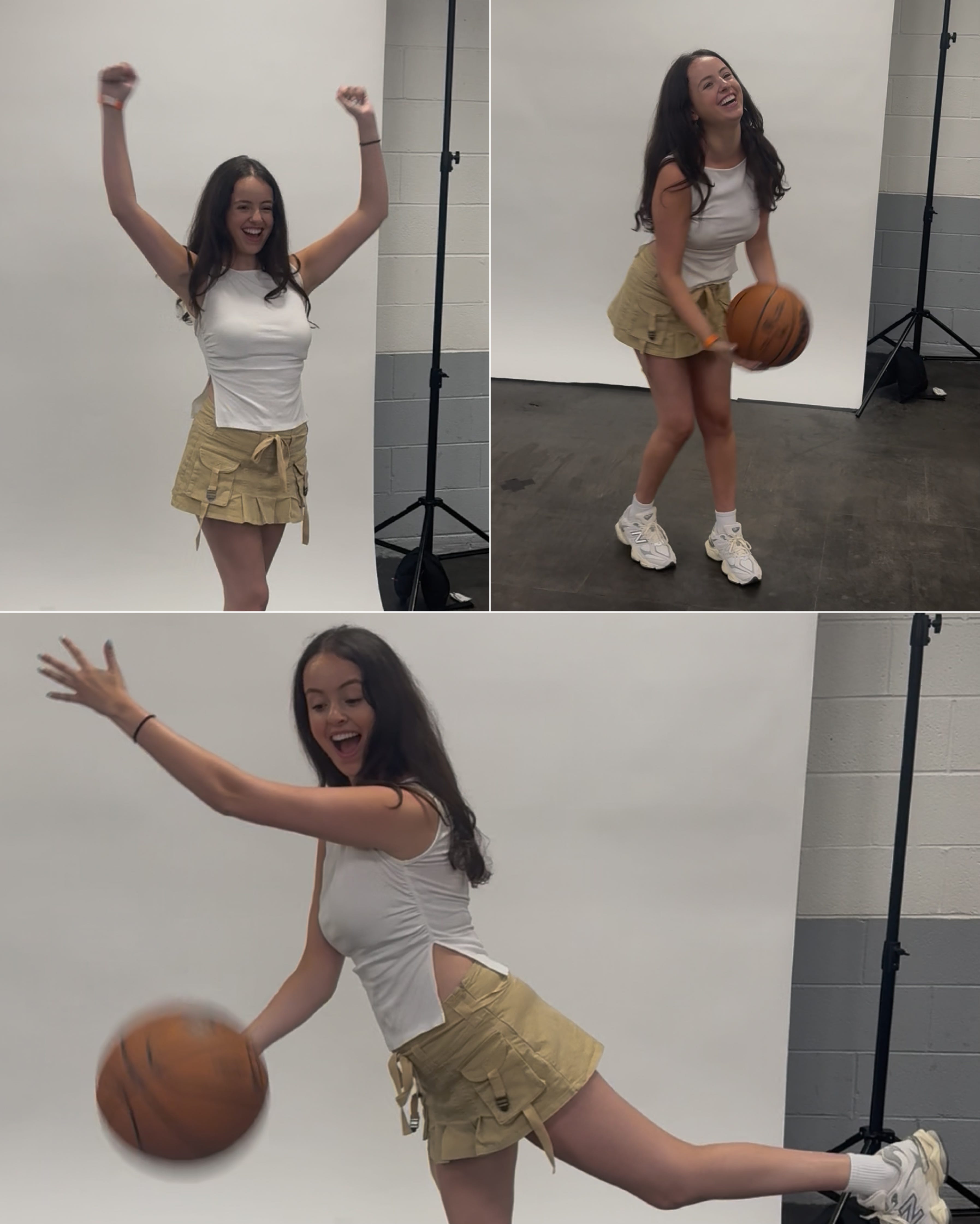
During one of those breaks, I picked up a basketball and asked them to take a video of me in front of the backdrop designated for the rookies. They enthusiastically obliged, hyping me up with smiles and pose suggestions.
The video was lighthearted, featuring me looking like an absolute fool while treating a basketball like a hot potato.
One thing was clear: I do not play basketball.
Soon after I posted it, a handful of comments questioned how an NBA media personality with over 100,000 followers could be successful without ever playing the game. One person even called it “insulting.”
Though those comments were minimal and laced with judgement, their confusion itself isn’t rare. My most commonly asked question when people find out what I do is:
“Why basketball? Did you play?”
When I tell them no — and joke that my playing experience is limited to surprisingly competitive HORSE matches against my dad in the driveaway of my childhood home in Memphis (only fitting that Mike Conley would later become the one and only champion of the NBA’s HORSE competition) — I watch their face twist into a look of astonishment.
Many people who cover the NBA spent their childhoods practicing drills in a school gym — their hoop dreams crushed by a growth spurt’s end — or at least creating dynasties from their couch on 2K. I was doing neither.
So how did I get here?
That part’s easy. I created a fan account at 12-years-old to talk about my local NBA team. I ran it anonymously for six years before revealing my identity at 18. What started as Grizzlies content expanded into NBA content. That’s the SparkNotes version. (I detail more of that journey in this piece for the Commercial Appeal.)
But the deeper question is — why did I get here?
Why did an unathletic twelve-year-old girl decide she loved the NBA so much she’d devote a fan account to it, and eventually make it her career?
I watched a basketball team breathe life into a city, the closest thing to magic I’d ever experienced.
The 2011 Grizzlies were led by players who had been cast aside or overlooked. They found a home in Memphis, a city that embraces anyone willing to embrace it — the two sides believing in each other when no one else did.
Grit N’ Grind wasn’t just a sports mantra — it was a shared identity between a city and a basketball team. It was a lifestyle — one that celebrated hard work and passion, fusing them with pride and belief.
I fell in love with basketball before I even understood what a pick-and-roll was.
I fell in love with a feeling. The storybook nature of it: The joy, the heartbreak, the electricity.
The heroes (Zach Randolph, Mike Conley, Marc Gasol, Tony Allen). The villains (Blake Griffin, Chris Paul). The greatness (I found myself rooting for LeBron when he wasn’t playing my team). How none of it really mattered — but it was also everything.
I was drawn to the wholesome intimacy of fandom, especially of a small-market team — how you could be anywhere in the world and feel inexplicably connected to someone just by spotting that same logo on their T-shirt.
Here’s the truth: I’m not sure I’d be doing what I do if I’d been born somewhere else.
I like to think basketball would’ve found me no matter what. But the odds were stacked against me — a girl who preferred Broadway to video games; who dreaded field day due to her physical inadequacies.
My dad is the “stop what you’re doing and come watch this highlight” kind of man, so sports would’ve been thrusted upon me no matter what.
But if I’d been born somewhere like New York (where I currently reside) — with a buffet of historically successful professional teams to choose from — would I have connected to those teams? Would I have picked a different sport?
Maybe it would’ve been baseball. I’ve learned more about it in recent months and love its nuance, and how greatness isn’t bound by physical limitations like height.
But it will always be basketball, and it will always be Memphis.
Instead of hiding my fandom in hopes of being seen as a “serious” pundit, I let it bleed into everything I do. While I love learning from brilliant basketball minds like Steve Jones and Caitlin Cooper, my voice highlights a different perspective.
I discuss the league from the lens of a fan. Sure, I’m happy to offer analysis when appropriate. But mostly, I observe the feelings, the dynamics — the more complicated, the better. I make jokes with a community of strangers who, through shared interests, can sometimes feel like friends.
One of my biggest issues with sports fandom is the snobbiness that creeps in: “They don’t know ball.”
I have friends who watch three regular-season Grizzlies games all year but text me like the world is ending during the playoffs. Their fandom isn’t less valid — in fact, their eccentric perspectives are amongst my favorites.
Not everybody has the time or desire to commit to following a league obsessively. They shouldn’t be shamed or alienated for that.
That’s what’s infuriating about the internet: everyone wants to object, to be loud, to be right. So when people question my place in this space, even calling it “insulting,” I don’t let it get to me. (That tweet’s been deleted, for what it’s worth.)
I’ve gotten here because people have connected with something I’ve said — a joke, an opinion, a reaction tweeted with shaking hands and a beating heart. To me, that’s beautiful — how fandom can weave itself into our identity, bringing people together from across the globe.
I’m not the voice of NBA basketball. I’m a voice.
If my voice doesn’t resonate with someone, they simply don’t need to follow me. In fact, if I bother them, I encourage them to mute me! It’s a great feature; one that’s become necessary to my wellbeing.
But to suggest somebody doesn’t belong in sports because their perspective varies from whatever “norm” has been established is not only wrong but harmful. Everybody belongs in sports. Everybody’s voice matters.
I’m still finding my place in this ever-changing space of sports media. I’ve literally grown up on NBA Twitter. I’ve seen it at its best and its worst. I’ve tweeted, TikToked, Instagrammed, podcasted — even BlueSkyed.
But one thing I’ve done privately instead of publicly is writing — and I want to change that.
Writing is what got me here in the first place, even if it was just 140 characters at a time. It’s what I love most — a passion so sacred I avoided traditional journalism just to preserve it.
My goal with creating this Substack is simple: to have a place to write. No deadlines, no publication, no pressure. Just me, and whoever decides to join along. (If you’re reading this, hello! I appreciate you immensely.)
I’ve shared my fandom online for more than half my life. Now, it’s time to expand upon that and do something meaningful to me; something that isn’t tailored to an algorithm.
I can sit here and preview a slate of games. But there are plenty of people who can do that better than me (and frankly, who cares?).
I want to tell you how Taylor Swift’s My Tears Ricochet perfectly captures Dillon Brooks’ departure from the Grizzlies. I want to dissect why, the more time passes, Kevin Durant joining the Warriors feels brave rather than cowardly. I want to explain why CJ McCollum’s Players’ Tribune essay is a piece of literature — and why the teams that fall short can be as meaningful as the ones that win it all.
My biggest goal is to make this space more inclusive. Less gatekeeping. Less judgment. A community for the sickos who watch random League Pass games and for the casuals who just like the drama.
There WILL be real basketball observations on this Substack. There will also be silliness, drama, perhaps even some non-basketball thoughts (boo!).
Honestly, I’m not sure what exactly this Substack will bring. What I do know is that I’m excited to finally be sharing the thing I love most with the community social media has brought me.
Welcome! Let’s de-rot our brains together.
Excited for your substack!! I’ve enjoyed your takes on the NBA in the past and I’m ready for some more via this platform.
Really loved this piece Molly! I’ve been a fan of yours for a long time and I’m really excited to see what you write!